Showing posts with label Spring. Show all posts

Jul 26, 2014

Orange Peach Jam


I always thought that jam-making was an enormous deal -- something that grandmothers from another time did in their cottages on rural routes in middle America. They would pick and cut up fresh fruits, boil them on hot summer nights and then can them, processing the cans with a magic I don't understand and am afraid to master, so they and their grandchildren could enjoy the results in the middle of winter, spread onto thick slices of fresh, warm-from-the-oven homemade bread. Sounds idyllic, no? And so not me.

So I was pleasantly surprised when I successfully made jam and jelly last summer. I didn't can either of them (and I still haven't gone that far) but they were both delicious and I even used pectin when I made the jelly! Lately, there have been wonderful peaches at our greenmarkets and, being unable to walk away from such abundance, I keep bringing them home. And there's just so many I can put into my smoothies!

So I decided to make some into jam. Not wanting to go through a whole big-deal production, I found a recipe on Pure Kitchen for Spreadable Raisin Jam. This isn't cooked at all; instead raisins, orange juice and spices are put into a blender until jammy. It sounded perfect but my peaches needed to be cooked to taste more peachy! So I boiled them with spices and orange juice and then blended them for about a minute and they were delicious! The jam is entirely unsweetened and has a little kick from the spices which I love. It's great as a snack on rice cakes and also spread on gingersnap cookies. Enjoy!

Orange Peach Jam
inspired by Pure Kitchen

In a medium pot, combine all ingredients and bring to a simmer over medium heat. Cook 25 minutes, adding water or additional orange juice if necessary. Let come to room temperature, transfer to a blender (or nutribullet) and blend for about 1 minute, until it reaches desired consistency. Bon appetit!

Links:

Feb 20, 2014

Potato and Celeriac Puree


Nutritionists often tell us to eat as many different colors as we can. And on a good day, I can probably get three or four onto my plate -- white, green, pink and red. But there are some colors that we almost never get such as my favorite, purple.

That all changed the other night with this delectable puree. Yes, it's another celeriac (white) recipe but this time I mixed the celeriac with purple potatoes. The celeriac blended right in with the potatoes and we wound up with this exquisite meal, served alongside baked eggplant (for the vegetarian) and chicken (for the omnivore). Leftovers we reheated in a 350F oven for 20 minutes and served under buffalo steak (for the omnivore) and portobello mushrooms (for the vegetarian). A great take on a more traditional (and less colorful) meal!

A note about dairy: as many of you know, I have been avoiding dairy (to the best of my cheese-addicted abilities) for almost a year. I recently re-introduced clarified butter (ghee) into my diet and I love it. It brought an especially rich quality to the puree and mixed perfectly with the rice milk. If you're avoiding dairy of all sorts, feel free to substitute coconut oil instead.

This puree ended up a little chunky (which I love -- anything too silky smooth bores me about halfway through). If, however, you prefer a smoother puree, mash the potatoes and celeriac in the food processor instead of by hand. Bon appetit!

Potato and Celeriac Puree

Put potatoes into a large pot and cover with cold water (make sure the pot is big enough to fit the celeriac too and that you put in enough water to cover both). Add kosher salt. Bring pot to a boil over high heat, covered, and cook 10 minutes. Add celeriac and boil another 10 minutes. Drain and return to pot.

Meanwhile, in a small saucepan, bring rice milk to a boil. Using a potato masher, mash potatoes and celeriac as smoothly as desired (you could also do this in a food processor). Add 1/4 cup milk and stir (and mash) vigorously until absorbed by the vegetables. Add 1/2-1 tablespoon butter and stir (and mash) until absorbed. Continue adding 1/4 cup milk and 1/2-1 tablespoon butter until puree is a cohesive texture and as rich and decadent as you desire. Sprinkle with sea salt and serve.

Links:


Feb 14, 2014

Fennel, Celeriac, Parsley and Red Onion Salad

I'm spoiled. I live in New York City, surrounded by wonderful supermarkets (I have three to choose from everyday, not to mention the two that I choose not to frequent because there are better options) and one to two Greenmarkets within walking distance as well as countless others a short subway ride away. I can get fresh vegetables (in and out of season) and, while I try to eat seasonally to keep costs down and quality up, I don't fret about it too much if one of us has a hankering for eggplant or tomatoes in the middle of February.

As for how this affects my cooking, unless we're having company over, I try not to buy too many ingredients for any one meal (another side of keeping costs and waste down). So I take for granted that I'll have flavorful ingredients that don't need much to make them vibrant and tasty.

But this salad brought all these facts starkly into relief. A simple winter salad, it's a delightful mix of fennel, celeriac and parsley, all tied together with a simple olive oil and lemon juice dressing and sprinkled with toasted pumpkin seeds. Sounds perfect, no? Well, it was good but neither my celeriac nor my fennel was anywhere near as flavorful as it should have been. So, while it was tasty, it wasn't fantastic. As the vegetarian put it, "The flavors are all good but they're so quiet!"

So why, you might ask, am I even sharing this with you? Because it is good. And it's a winter salad (which is exceedingly rare. And, if you make it with exceptionally fresh ingredients (like from a garden if you're lucky enough to have one), it will be phenomenal.

I'm entering this in Raw Foods Thursday on Gluten-Free Cat. Join us!

Fennel, Celery Root, Parsley and Red Onion Salad
adapted from the Washington Post

Preheat oven to 350 degrees. Toss pumpkin seeds with 1 tablespoon olive oil. Roast 6 minutes. Set aside and let cool.

In a large bowl, toss together celeriac, fennel, onion and parsley. Add oil, lemon juice, sea salt and pepper and mix well. Taste and adjust seasonings as needed.

Serve, sprinkling each portion with pumpkin seeds and avocado. Bon appetit!

Additions? If you want to add some protein, a can of tuna is a delicious addition. This also works nicely on a sandwich with some sliced turkey.

Drink? A glass of Riesling.

Links:

Jun 18, 2013

Quick Sauteed Wild Mushrooms


Not surprisingly, the most difficult thing to get used to when adapting to eating animal proteins at every meal is how to still make a satisfying meal for the vegetarian without too many extra dishes and too much extra work. When we're both home early enough, the vegetarian helps, often making an extra starch for himself and/or baking a few veggie burgers alongside my protein of choice.

But many nights I'm alone in the kitchen, which I find surprisingly relaxing. Those nights, my movements are more fluid and I follow my recipes less closely. I cook more based on taste and smell and excitedly await when the vegetarian comes home and (hopefully) remarks on how delicious the house smells.

I'm sure not everyone would agree with this, but I think sauteed mushrooms (especially with lots of garlic and shallots) are a delicious smell. And they have enough substance to be a perfect meat substitute. Over quinoa linguine, they became the vegetarian's main dish. And a smaller portion alongside deviled eggs with anchovies was a perfect dinner for me. You could also up the protein by adding some crushed almonds on top of the mushrooms or (if you're cooking only for omnivores) mixing in some anchovies. Bon appetit!

Quick Sauteed Wild Mushrooms
(adapted from Whole Foods and Macrobiotic Cooking and Healing)

With a damp paper towel, clean mushroom caps. Remove woody stems from shiitakes and slice all the mushrooms thinly. Heat olive oil in a skillet over medium-high heat. Add shallots and cook 1 minute. Add mushrooms, stir frequently, and cook 8 minutes, until they become fragrant and begin to brown.

Add garlic and Innergy Biotic, increase heat to high and cook 2 minutes, until liquid all-but evaporates, stirring occasionally so as to ensure that nothing sticks to the bottom of the pan. Turn off heat, add thyme, salt and pepper and stir well. Serve, sprinkled with parsley. Enjoy!


Links:

Apr 12, 2013

Pan-Roasted Asparagus with Lemon and Garlic


Spring has sprung! Today was the first warm, sunny days in months that actually made me want to spend as much time as possible outside, soaking up the magnificent (and all-but forgotten) warm sunshine.

What do you crave in spring? I often think in terms of colors and I crave light green foods, especially asparagus. The first heralds of spring (often appearing in markets, as they did this year, when the month at the top of each calendar page is at odds with the weather outside), they help pull me out of my annual winter doldrums and remind me that this, too, shall pass and there will be wonderful warm days again when I can once more revel in our beautiful terrace, our personal oasis in the upper extremities of Manhattan that almost makes our commutes worthwhile.

But back to asparagus. While most people grew up blanching or boiling them, my family always roasted them in a hot oven until they became slightly caramelized. Delicious! But what about those days when your oven is otherwise occupied or you just don't feel like turning it on? That, my friends, is when you turn to pan-roasting.

I served these four times in the past three weeks: at our monthly cooking adventure, alongside Iranian Shrimp with Turmeric, Saffron, and Lemon Juice and Persian Dill and Lima Bean Rice; at both Passover seders (without the Parmesan cheese) and at an impromptu Game of Thrones gathering we hosted last weekend. And, while the vegetarian doesn't like asparagus, everyone else gobbled them up. They're wonderful warm or at room temperature and equally tasty with and without the parmesan cheese. Bon appetit!

Pan-Roasted Asparagus with Lemon and Garlic


Cook asparagus, olive oil, water and garlic in a large lidded pan over high heat, uncovered, for 2 minutes. Toss asparagus (tongs are the best for this), cover, and cook 1 minute. Remove lid, toss again, return lid and cook 5 minutes. Add lemon juice, toss again, season with salt and pepper and shave parmesan on top. Enjoy!

Links:

Aug 16, 2012

BED: Baked Bluefish (or Tofu)


Several months ago, I read a review in Tasting Table of a cookbook called The Adaptable Feast which was comprised of recipes for omnivore dishes from which you could create vegetarian servings and vegetarian dishes that you could add some meat to and feed a couple of omnivores. While I never ended up buying the book, this idea of adapting one dish for various diets definitely piqued my curiosity.

And so, when I saw bluefish at the farmer's market one Saturday, the vegetarian and I came up with a way to make just one dish out of it but still have two meals. Originally, I was just going to make a separate pan of tofu (and I'm including instructions for that if it interests you) but the vegetarian wasn't in the mood for tofu so instead I baked the bluefish on top of lots of potatoes and onions. Because I used a big pan, the bluefish was only on half of the vegetables and those, along with a Cucumber Millet Bean Salad with Mozzarella and Blackberry and Mozzarella Salad with Rosemary. (NOTE: If you're a strict vegetarian, you'll probably want to cook the vegetables in a separate pan from the fish so as to avoid any fish juices sneaking in.) If you're drinking wine, I recommend a Chardonnay, preferably local. Bon appetit!

Baked Bluefish (or Tofu)
Adapted from Allrecipes.com

Preheat oven to 500 F. Pat bluefish (and/or tofu) dry and sprinkle with salt and pepper. In a large bowl, toss potatoes with 1/2 cup melted butter.

Line a baking pan with aluminum foil. Spread out potatoes evenly. Place fish (and/or tofu) on top. Brush with 2 tablespoons melted butter. Sprinkle onions and dill over everything.

Cover with another sheet of aluminum foil and bake 10 minutes, then reduce oven to 400 and bake an additional 20-30. (If only doing tofu, only bake for an additional 10 minutes.) Enjoy!

Edible Links:

Jul 14, 2012

Monthly Cooking Adventure: Gateau chocolat blanc et cerise (White Chocolate and Cherry Cake)

If I could only have one food for the rest of my life? That's easy: Pez. Cherry flavored Pez. -- Stand By Me.

Sorry for the extended silence but there have been many changes chez nous. In short ... we moved! Goodbye Lincoln Center and hello Washington Heights! This is a total change of area, apartment, (kitchen!) and commute but, while we now spend a bit longer on our subway rides, the changes are definitely for the best.

So after taking a few days to organize my "perfect" kitchen (using help from various sources), we invited some friends over and turned June's Monthly Cooking Adventure (just a few days late) into a 4th of July Housewarming Party. And how did I break in the new kitchen, you ask? By going off-diet and making a wonderful Gateau chocolat blanc et cerise (White Chocolate and Cherry Cake), Poivrons rouges farcis aux carottes (Red Peppers Stuffed with Carrots) and Corn and Edamame Salad with Mint. (Links are to recipes I adapted.)

**A note about the cake: This was my first time working with white chocolate (and I'm already not much of a baker) so I learned a lot along the way. The biggest issue was that I used too much butter (since white chocolate already has such a high butterfat content) so I ended up pouring off excess oil after the cake was cooked. I've adjusted the ingredient amounts below to reflect what I believe will work but, if you make it, use your best judgment and let us know how it turned out! Also, while my inspirational recipe (from Chocolate & Zucchini) didn't include one, I've added an (optional) crumble topping. This cut the sweetness nicely and also provided a texture contrast. I highly recommend this with vanilla ice cream. Bon appetit!

Gateau chocolat blanc et cerise
inspired by Chocolate & Zucchini

Start your preparations: Preheat oven to 325 F and butter a 10-inch springform pan.

Microwave white chocolate and butter together for 1 minute, then stir until well-combined.

Add sugar and stir with a wooden spoon. Let rest 5 minutes. Add cream a little at a time, stirring after each addition. Mash cherries, then add to the batter. Sift in flour and salt and stir until just combined.

Pour batter into pan and bake 45 minutes. Turn off oven and leave cake in there to rest for 5 minutes. Transfer to a cooling rack and let cool completely, unclasping sides of the pan. Sprinkle top with nuts. Once it's room temperature, transfer to refrigerator and let chill several hours (at least 4). Enjoy!

Edible Inspirations:

Jun 7, 2012

Monthly Cooking Adventure: Falafel (Fava Bean Fritters)

"A census taker once tried to test me. I ate his liver with some fava beans and a nice chianti." -- The Silence of the Lambs.

Not wanting to skip our Monthly Cooking Adventure this month (and wanting to see what would happen if I "went off" the Body Ecology Diet for an evening), the vegetarian and I picked fava beans as this month's main ingredient and I decided to make Falafel, fava bean fritters. I adapted the recipe from The Book of Jewish Food and, with my seasoning changes, everyone agreed they were the best Falafel we'd ever had ... if I do say so myself.

I actually tweaked the original recipe quite a bit. To counteract the bitter fava beans, I added pungent spring onions, salty sea salt, hot chile peppers, bittersweet cumin, garlic, sour yogurt and walnut oil. I also soaked the beans with a piece of kombu; this makes them easier to digest and I highly recommend it. The fritters are best right out of the oven (along with some hot sauce) so only make as many as you're going to eat. The batter saves well so you can fry up more whenever the inspiration strikes.

For a treat, I recommend them with Vegetable Couscous and Chickpea & Chile Pepper Salad. Bon appetit!

Falafel (Fava Bean Fritters)
adapted from The Book of Jewish Food

Place beans and kombu in a large pot and cover with cold water. Let soak 12 hours. Rinse, drain well and pat dry on a clean dishtowel.

Finely chop parsley and onions in a food processor (much easier than doing it by hand). Remove and put aside. Add beans to food processor and blend, pausing to scrape down the bowl, about 15 minutes, until it's a smooth paste about the consistency of chunky peanut butter. Add salt, chile powder, cumin, garlic and yogurt and process another 5-10 minutes until well combined. Return parsley and onions and pulse a few times, just until mixed through. Remove from food processor and set aside to rest for 1 hour.

To fry: The best bet is to do these in batches. Heat about 1 inch of oil in a large pan over medium-high heat until just before it smokes. Take walnut-sized lumps of batter (smaller than you may be used to but, believe me, it works better) and shape them into round flat cakes. Fry as many as you can comfortably fit into the pan (without crowding!). Once the falafels are in, lower heat to low and let fry until golden, about 5 minutes on each side. While they're frying, set up a plate with a layer of paper towels on it. Remove falafels to this plate to drain once they're cooked. Serve with pita bread, salad or whatever you like. Enjoy!

Links to edible inspiration:

Jun 4, 2012

BED: Moroccan Fava Bean and Vegetable Soup

Two and a half years ago, not long after the vegetarian and I started dating, I came down with mononucleosis. Being over 21, and therefore past the age at which people normally contract this disease, I was hit particularly hard and all-but confined to bed-rest for the next eight months. What a way to start a relationship!

Once I was allowed to resume my normal life, I did so with my usual gusto. Much to my chagrin, however, I found that my energy stores were much lower than they'd ever been before. Not to mention the fact that my immune system was now totally shot. So I experimented with different things -- vitamins, vegetarianism, a higher protein diet -- and, while there were glimpses of more energy, nothing worked long-term.

About a month ago, I was killing some time in Barnes & Noble and happened upon a book that promised to "rebuild my immunity": the Body Ecology Diet book. A skeptic, I nevertheless began reading the introduction and, much to my shock, I felt as though Donna Gates was describing my very symptoms. So I've put myself on the Body Ecology Diet, at least as well as it can fit into my hectic life.

The basic tenets of the diet are no sugars (including most fruits, some vegetables, no dried beans, no dairy and no gluten) and 80% of your plate should be non-starchy vegetables. Obviously some days (and meals) this is easier to follow than others. And living with a vegetarian who prefers grains and beans to vegetables has made cooking and meal-planning a challenge.

The good news, however, is that, frustrating as this has been, I've felt more consistently stronger and happier in the past three weeks than in the past two years. So, at least for now, this is the way to go. And don't worry -- our monthly cooking adventures will still be my monthly permission to myself to venture off. But for now, enjoy this soup with a Lemon-Chive Potato Salad and bon appetit!

Moroccan Fava Bean and Vegetable Soup

Heat 1 tablespoon olive oil in a large, heavy soup pot until it glides like water. Add leeks, onion, carrots and celery and cook, stirring, 5 minutes. Add radishes, potatoes, fava beans, water, 1 teaspoon salt and parsley. Bring to a boil, reduce heat, cover and simmer 45 minutes.

Puree using an immersion blender. Add 1/4 teaspoon pepper, turmeric and cilantro and bring to a simmer over medium-low heat. Reduce heat to low, cover and simmer, stirring, 30 minutes. Add remaining salt and pepper. Serve warm, garnished with cilantro and remaining olive oil. Enjoy!

Inspirational Links:
Jun 3, 2012

Rustic Citrus Jicama Scramble

When the vegetarian and I first started this blog, I realized I needed to change my reading materials. I first discovered the world of food blogs back in 2005 when I was a student living in Paris and stumbled upon Chocolate and Zucchini. So I'm certainly no stranger to food blogs. But vegetarian food blogs? I had always found them too limiting. Of course, now that I (almost exclusively) cook vegetarian food, they don't seem quite so limiting anymore. And since I do sometimes get tired of adapting omnivore recipes for our kitchen, it's a welcome change to find a recipe that "needs" no tweaking. Plus, I get to learn about new (to me) ingredients that are often found in vegetarian kitchens. What's not to like?

One of the first vegetarian (actually vegan) food blogs I started following was Kathy's Healthy. Happy. Life. At that time (four months ago), I bookmarked this Rustic Citrus Carrot Scramble. Well, life got in the way (as it always does) and now it's May and I've finally found the time to start making some of the recipes saved in my "Blogworthy" folder. Of course, I tweaked the recipe to make it more springlike, most notably substituting jicama, a sweet root vegetable, for the carrots. I sauteed the jicama and tofu in some neutral canola oil along with some sesame oil, a sour-sweet orange, some white vinegar, salty soy sauce, sour lemon zest and kosher salt. I even used nutritional yeast for the first time; it took some getting used to but I'll definitely experiment with it more in the future! Kathy recommends this for breakfast but we had it for dinner, over kaniwa (a grain very similar to quinoa) and accompanied by Pinot Gris, with Kasseri cheese for dessert (for me). Bon appetit!

Rustic Citrus Jicama Scramble
inspired by Healthy. Happy. Life

Wrap tofu in a clean kitchen towel and place on a plate. Put another plate on top and weight it down with cans and/or jars. Allow to sit and drain for 1 hour (or as long as possible).

Heat a large skillet over high heat. Swirl in canola oil. Add onion and saute 2 minutes.

Toss in jicama, sesame oil, orange and soy sauce. Unwrap tofu and crumble it in as well. Stir in nutritional yeast, lemon zest and pepper. Cook for another 4 minutes, mixing well and lowering heat and adding more oil if necessary. If pan seems dry, you can also break up orange and distribute its juices.

Turn off heat and add vinegar and salt. Let sit 2 minutes to cool and thicken. Serve at room temperature. Enjoy!

Inspirational Links:

May 4, 2012

Monthly Cooking Adventure: Stuffed Artichoke Bottoms

"Remind me to tell you about the time I looked into the heart of an artichoke." -- All About Eve.

 This month's recipe actually features artichoke bottoms, not hearts, and let me tell you -- it took some effort to find them! I know I should have just butchered my own, but I was feeling quite lazy yesterday, especially knowing that I'd be cooking a full meal for three guests later on! So I used canned artichoke bottoms. Lazy, yes. And delicious? Oh, yes yes yes! So I recommend laziness if that's where you are. And, if so, this recipe comes together so quickly it's just delightful.

Because the vegetarian isn't crazy about artichokes, and therefore wouldn't be eating them, I treated myself to the addition of an omnivore ingredient -- anchovies. In my opinion, anchovies get a totally undeserved bad reputation. As our friend Hill put it last night -- they're like delicious additions of salt. And, really, how bad can that be? (For a vegetarian version, add 1 tablespoon soya sauce.) Along with some garlic and sour lemon juice and zest, they were the perfect accompaniment to our Arugula and Fava-Bean Crostini and Smoky Fried Rice. To drink I recommend an Espiral vinho verde. Enjoy!

Stuffed Artichoke Bottoms
Adapted from The Book of Jewish Food

Preheat oven to 350F. Mix anchovies (or soya sauce), garlic, parsley, breadcrumbs, oil and lemon juice and zest together in a medium-sized bowl. Place artichoke bottoms in a baking dish and fill with stuffing. Pour water around artichokes, making sure it doesn't reach the filling. Bake 25 minutes. Serve at room temperature. Bon appetit!

Edible Inspirations:

May 1, 2012

Kreplach: Pasta Stuffed with Veggie Burgers (or Lamb)

Last Friday night, Stina, a friend from college, came over for Shabbos dinner and a cooking lesson. What a treat! The vegetarian and I rarely have Friday nights off so our ability to have a real homecooked Jewish meal has been quite reduced recently. Not wanting to make something too complicated (or that had to cook for hours) and also wanting an easy way to make our dinner vegetarian-friendly, I decided to teach her how to make kreplach. 


Kreplach are the Jewish version of ravioli. Often served in chicken soup, you can also have them with gravy as a pasta dish. Because the filling has to be cooked beforehand, they're a fantastic use of leftovers. They're often a "second-day meal," meaning that you use leftovers from a holiday meal to make them. But they're so delicious that you can make up whatever kind of filling you want -- just for them!

And because they're a pasta, they're my entry for Presto Pasta Nights #262, hosted (and created) by Ruth at Once Upon a Feast. Join us!

These kreplach, I must caution you, are anything but traditional. First of all, I make them with wonton wrappers. Easier to find than fresh pasta sheets (and certainly simpler than making your own), these have always been our "family secret" when making kreplach, ravioli or dumplings. They're easy to work with and, more importantly, delicious!

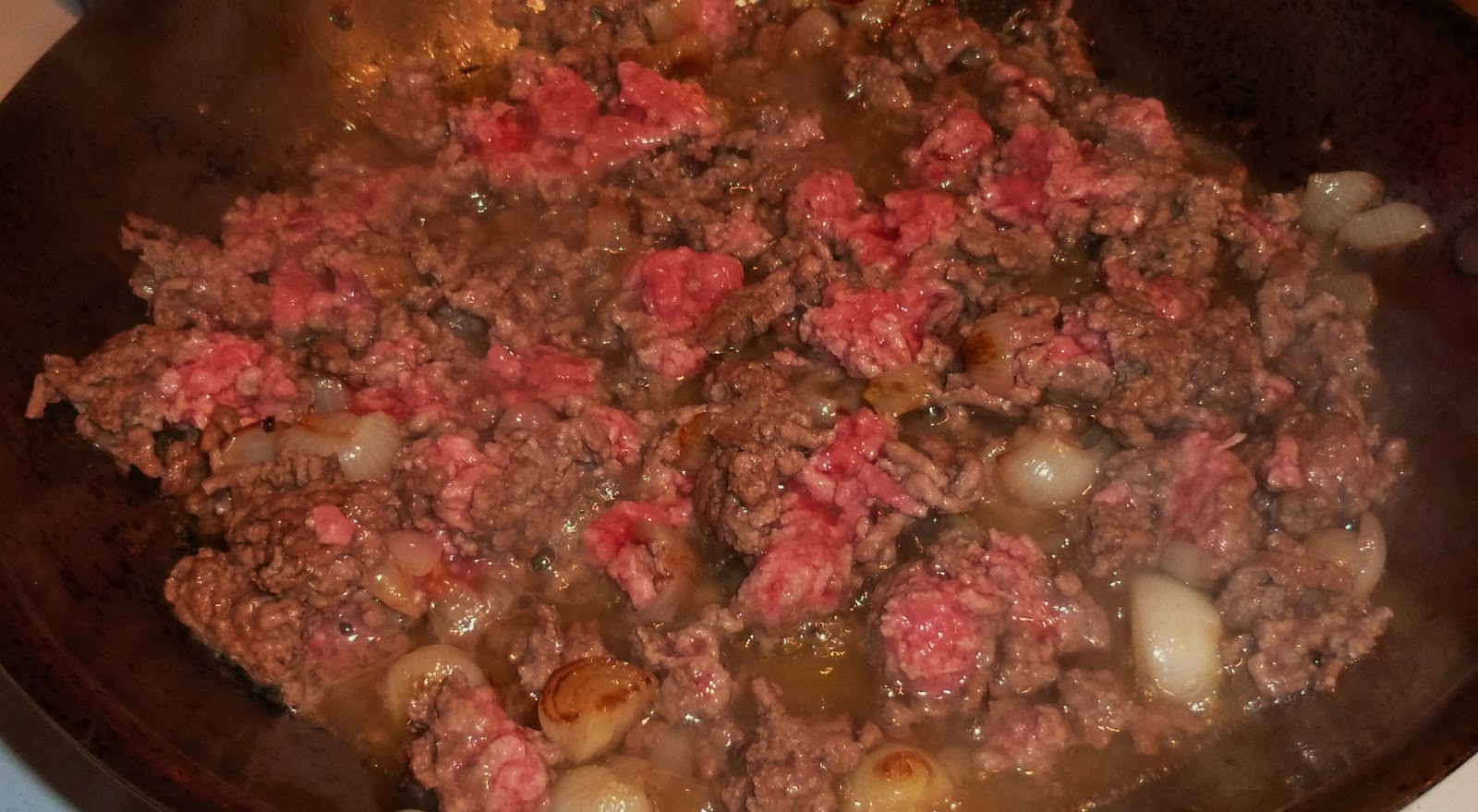
For these kreplach, I made two batches of filling -- one with ground lamb and the other with crumbled California Veggie Burgers (from Dr. Praeger's -- super delicious). Everything else about both fillings stayed the same. Both of these "proteins" have sweet and astringent notes. So in went some pungent pearl onions to balance it out. (Buy these pre-peeled to save time.) Everything got sauteed in neutral canola oil and seasoned with  fleur de sel and pungent, hot black pepper. To bind the filling (and make it easier to work with), I whisked it in the food processor with cream. Round out the meal with a bottle Cotes du Rhone (we had a fantastic biodynamic bottle from that I brought back from Paris three months ago) and, of course, challah. Some apple pie makes a wonderful dessert. Enjoy!

Kreplach (Pasta Stuffed with Lamb or Veggie Burgers)

Heat oil in a large skillet over medium heat until it moves in the pan like water. Add onions and cook 5 minutes, until soft. Add lamb (or veggie burgers), salt and pepper and cook, breaking up the meat (or patties) with a wooden spoon, until the meat is cooked through and no longer pink (at least 5 minutes). Let it come to room temperature, then blend to a paste in food processor with heavy cream and parsley.

Transfer to a bowl and make the kreplach. Place 1 teaspoon filling in the middle of a wonton wrapper (don't overstuff!). Lightly run water around the edges of the wonton wrapper (this is best done with your finger). Fold diagonally to make a triangle. Press out excess air and and seal the edges (the water makes them stick). Now make a ring with two opposite corners of the wrapper and press them firmly so they stick together. Let stand 15 minutes.

Bring a pot of salted water to a boil. Cook kreplach 20 minutes, until they all have floated to the top and the wrappers have turned translucent. Serve in soup or dry, with sauce. Bon appetit!

Inspirational Links:

Apr 25, 2012

Passover Cooking: Chopped Eggs with Chives

Whew! Between Passover, work and both of us taking turns getting sick, it's been AGES since we've posted anything! And, truth be told, other than holiday cooking, our kitchen hasn't been seeing much action lately either. We even skipped March's Monthly Cooking Adventure. But now April's halfway done (time really does fly!) and I've ventured back into the kitchen.

Today's recipe is a quickie and extremely versatile. I often make it during Passover (in various permutations) and it's delectable with matzoh. Drier than typical egg salad, you could even eat it with a fork or, after the holiday, serve it with slices of bread. Normally in my family we make chopped eggs and onions. But I decided I didn't want to go through the trouble of cooking any onions (and substantial amounts of raw onions are the only food that gives me heartburn). So I embraced spring and brought a lighter touch to my eggs with some chives. I also had some tarragon languishing in the fridge so I added that in for a touch of sweetness. This makes a wonderful breakfast, lunch, snack or, alongside some couscous (or quinoa) mixed with cucumbers, dried figs and fontina d'Aosta, a light dinner. Bon appetit!

Chopped Eggs with Chives
  • 6 eggs, hard-boiled
  • 15-20 chives, finely chopped
  • leaves from 6 sprigs tarragon
  • 1/2 teaspoon white pepper
  • 3 tablespoons chicken fat or olive oil
Place all ingredients in a wooden bowl and, using a mezzluna, chop coarsely. Serve at room temperature.

Links to inspirational recipes: